Zero Trust Security: 9 Essential Strategies for Critical Enterprise Defense in 2026

Share

Zero Trust Security: 9 Essential Strategies for Critical Enterprise Defense in 2026

Cyberattacks are growing more sophisticated every year, and the old castle-and-moat approach to network defense no longer works. Organizations need a fundamentally different model to protect their data and systems. That model is zero trust security, a framework that assumes no user or device is trustworthy by default. In this guide, we break down nine essential strategies that every enterprise should adopt to build a resilient zero trust architecture in 2026.

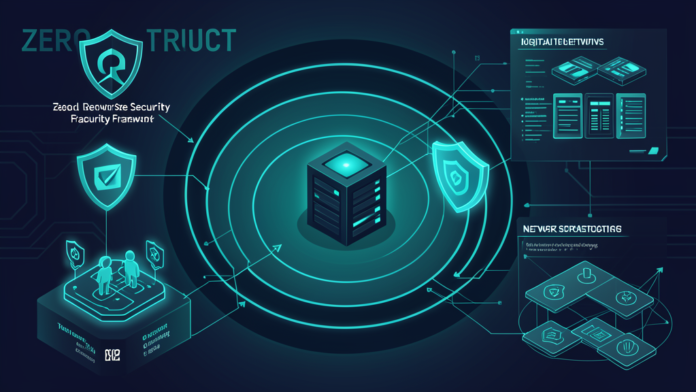
Zero trust security framework protecting enterprise network with layered defense

What Is Zero Trust Security and Why It Matters in 2026

The zero trust model is a cybersecurity framework built on a simple principle: never trust anyone, always verify. Unlike traditional security models that assume everything inside the corporate network is safe, it requires continuous authentication and authorization for every user, device, and connection, regardless of location.

The concept emerged from John Kindervag’s work at Forrester Research in 2010, but it has gained massive adoption over the past few years. The NIST Special Publication 800-207 formalized the framework, providing federal agencies and private organizations with a standardized approach to implementing zero trust.

In 2026, the stakes are higher than ever. Remote work is now permanent for many organizations. Cloud infrastructure powers most business operations. Threat actors use artificial intelligence to automate attacks at scale. These factors make perimeter-based security obsolete and make this approach not just an option but a necessity.

The Core Principles of Zero Trust Architecture

Zero trust architecture rests on three foundational principles. First, verify explicitly, meaning every access request must be authenticated and authorized using all available data points. Second, apply least privilege access, giving users only the permissions they need for their specific tasks. Third, assume breach, operating under the assumption that attackers are already inside your network.

These principles shift the security paradigm from defending a boundary to protecting individual assets. Every access decision becomes contextual, based on user identity, device health, location, and behavioral patterns. This granular approach dramatically reduces the attack surface available to malicious actors.

Organizations that understand these core principles can build effective zero trust frameworks. The key is treating every connection as potentially hostile, even those originating from within the network perimeter. This mindset transformation is what separates zero trust from traditional security approaches.

Why Traditional Perimeter Security Is Failing

For decades, enterprises relied on firewalls and VPNs to create a secure perimeter around their networks. The idea was simple: keep the bad guys out, and everything inside is safe. This model worked when employees worked in offices, applications ran in on-premises data centers, and devices were company-owned and managed.

That world no longer exists. Employees work from home, coffee shops, and airports. Applications run in multi-cloud environments. Users access corporate resources from personal phones and tablets. The network perimeter has dissolved, leaving traditional defenses exposed and ineffective against modern threats.

Zero trust security replacing traditional perimeter firewall with identity-based access

Once an attacker breaches the perimeter, they can move laterally across the network with minimal resistance. This lateral movement is exactly what the zero trust model is designed to prevent. By segmenting the network and requiring authentication at every step, zero trust limits the blast radius of any compromise.

The Rise of Lateral Movement Attacks

Lateral movement occurs when an attacker gains initial access through a phishing email or compromised credential, then moves through the network to reach valuable targets. In a traditional network, this movement is often unimpeded because internal systems trust each other by default.

Ransomware gangs have perfected this technique. They start with a single compromised account, escalate privileges, and eventually deploy ransomware across entire networks. The Cybersecurity and Infrastructure Security Agency (CISA) has identified lateral movement as a critical attack vector that zero trust directly addresses.

Zero trust network access solutions combat lateral movement by requiring authentication for every connection, even between internal systems. Attackers who compromise one device cannot pivot to others without passing through additional security checkpoints, giving defenders time to detect and respond.

9 Essential Zero Trust Security Strategies for 2026

Building a zero trust security framework requires a systematic approach. These nine strategies provide a roadmap for organizations ready to move beyond perimeter-based defense and adopt a modern, identity-centric security model.

1. Implement Strong Identity Verification

Identity is the new perimeter in this framework. Every user must be verified before accessing any resource, and that verification must go beyond simple passwords. Multi-factor authentication is the baseline, but advanced implementations use adaptive authentication that considers context like device posture, location, and time of access.

Consider adopting passwordless authentication methods like FIDO2 security keys or biometric verification. These methods eliminate the weakest link in identity security, the password, while improving user experience. Passwordless adoption also reduces the risk of credential theft through phishing attacks.

Organizations facing the cybersecurity skills shortage can leverage identity providers that automate much of the verification process. This reduces the burden on security teams while maintaining strong authentication standards across the organization.

2. Adopt Zero Trust Network Access

Zero trust network access, or ZTNA, replaces traditional VPNs with a more secure approach. Instead of granting broad network access once a user authenticates, ZTNA provides access only to specific applications and resources on a per-session basis. This dramatically reduces the attack surface available to compromised accounts.

ZTNA solutions also provide better visibility into who is accessing what. Security teams can see every connection in real time, identify anomalous behavior, and revoke access instantly when threats are detected. This level of control is impossible with traditional VPNs.

When selecting a ZTNA solution, look for one that integrates with your existing identity provider and security information and event management platform. Integration ensures that zero trust network access works as part of a cohesive security ecosystem rather than another isolated tool.

3. Enforce Least Privilege Access

Least privilege access means giving users only the permissions they need to perform their jobs, nothing more. This principle is central to the zero trust model because it limits the damage an attacker can cause with a compromised account. If a marketing employee’s credentials are stolen, the attacker should not be able to access financial systems.

Implementing least privilege requires regular access reviews and role-based access control. Start by inventorying all access rights across your organization, then identify and remove excessive permissions. Automate this process where possible to keep pace with organizational changes.

Just-in-time access takes least privilege further by granting elevated permissions only when needed and automatically revoking them afterward. This approach, sometimes called just-enough access, ensures that even administrators only have elevated rights for the duration of a specific task.

4. Continuous Monitoring and Analytics

Zero trust is not a set-it-and-forget-it model. It requires continuous monitoring of all network activity and user behavior. Security analytics platforms process vast amounts of data to detect anomalies that might indicate a breach in progress.

Zero trust security dashboard with continuous monitoring and threat analytics

Machine learning algorithms can baseline normal behavior for each user and device, then flag deviations for investigation. A user who suddenly accesses systems at unusual hours or from unexpected locations triggers an alert, even if their credentials are technically valid.

Threats evolve rapidly, as we have seen with the surge in attacks documented in our coverage of the top cybersecurity threats. Continuous monitoring ensures your zero trust security framework adapts to new attack patterns in real time rather than relying on static rules that quickly become outdated.

5. Microsegmentation of Networks

Microsegmentation divides the network into small, isolated zones, each with its own security policies. Even if an attacker breaches one segment, they cannot access others without passing through additional authentication and authorization checks. This containment strategy is essential for limiting the blast radius of any security incident.

Implement microsegmentation around your most critical assets first. Identify your crown jewels, the data and systems that would cause the most damage if compromised, and build strict segmentation around them. Then expand outward to cover less sensitive systems over time.

Software-defined networking makes microsegmentation more practical than ever. Cloud-native tools can create and manage segments programmatically, reducing the operational overhead that made segmentation difficult in traditional network environments. This is especially important given what we have learned from the supply chain cyberattacks surge that continues to threaten global business.

6. Secure All Endpoints and Devices

Every device that connects to your network is a potential entry point for attackers. The zero trust model requires verifying the health and compliance of every endpoint before granting access. This includes company laptops, personal phones under bring-your-own-device policies, and IoT devices that populate modern offices.

Mobile device management and endpoint detection and response solutions form the backbone of endpoint security in a zero trust framework. They verify that devices meet security requirements like running updated antivirus software, having the latest patches installed, and not running known malicious software.

The expansion of connected devices makes endpoint security increasingly complex. Our analysis of edge computing and IoT security highlights why endpoint protection must be a central component of any zero trust implementation in 2026.

7. Encrypt Data Everywhere

Encryption is a fundamental control in this framework. Data should be encrypted at rest, in transit, and ideally in use. Even if an attacker gains access to your systems, encrypted data remains unreadable without the proper decryption keys.

Transport Layer Security encrypts data moving between systems, while disk encryption protects data at rest. Emerging technologies like confidential computing extend encryption to data in use, allowing computations on encrypted data without ever exposing plaintext. This is particularly valuable for organizations handling sensitive data in cloud environments.

Key management is the critical challenge in encryption. If attackers can access your encryption keys, the encryption itself provides no protection. Use hardware security modules or cloud-based key management services to protect keys, and implement key rotation policies to limit exposure if keys are compromised.

8. Automate Threat Response

Speed is critical in cybersecurity. The average time to identify and contain a breach is measured in days or even weeks. These frameworks use automation to shrink that window dramatically. When a threat is detected, automated playbooks can isolate compromised systems, revoke access tokens, and alert security teams simultaneously.

Security orchestration, automation, and response platforms coordinate these actions across your security stack. They integrate with your identity provider, endpoint detection tools, and network controls to execute response actions without human intervention for common scenarios.

Automated threat response in zero trust security architecture with SOAR integration

Automation also addresses the human bottleneck in security operations. With cyber threats growing faster than security teams can scale, automated response ensures that threats are contained before human analysts even see the alert. This is critical for maintaining security posture despite ongoing talent shortages in the cybersecurity field.

9. Build a Zero Trust Culture

Technology alone cannot deliver zero trust. Your people must understand and embrace the principles behind it. Security awareness training should explain why zero trust matters, how it changes daily workflows, and what employees can do to support the framework.

Focus training on practical behaviors rather than abstract concepts. Teach employees to recognize phishing attempts, report suspicious activity promptly, and understand why they may need to reauthenticate or use additional verification steps. When people understand the why behind security controls, compliance improves significantly.

Leadership commitment is equally important. Executives must model zero trust behaviors and allocate adequate resources to implementation efforts. A zero trust initiative without executive backing will struggle to overcome organizational resistance and resource constraints that inevitably arise during transformation.

Zero Trust Architecture Implementation Challenges

Implementing zero trust architecture is a marathon, not a sprint. Organizations typically encounter several common challenges during their journey. Understanding these obstacles in advance helps teams plan effectively and maintain momentum.

Overcoming Legacy System Limitations

Many organizations rely on legacy systems that were never designed for zero trust. These systems may lack support for modern authentication protocols, cannot integrate with identity providers, or have no concept of granular access control. Retrofitting zero trust principles onto these systems requires creative approaches.

One strategy is to place legacy systems behind zero trust proxies that handle authentication and authorization on their behalf. The proxy intercepts every connection, verifies the user, and only forwards legitimate requests to the legacy system. This approach extends zero trust protection without requiring modifications to the legacy application itself.

For organizations heavily invested in cloud infrastructure, the cloud security best practices we previously covered provide additional guidance on integrating zero trust with cloud-native systems. Cloud platforms often have built-in zero trust capabilities that can accelerate implementation.

Another challenge is the temptation to do too much too fast. Zero trust transformation should be phased, starting with high-risk areas and expanding gradually. Attempting to transform everything at once typically leads to operational disruptions and stakeholder fatigue that can derail the entire initiative.

Budget constraints also play a role. While zero trust ultimately reduces security costs by preventing breaches, the initial investment can be substantial. Organizations should prioritize investments based on risk assessment, focusing first on protecting the most valuable and vulnerable assets.

Integration complexity is perhaps the most persistent challenge. Zero trust requires multiple security tools to work together seamlessly. Organizations should prioritize solutions with open APIs and strong integration capabilities to avoid creating new silos that undermine the unified visibility that zero trust requires.

The Business Case for Zero Trust Security

Security leaders often struggle to justify zero trust investments to business stakeholders who view security as a cost center. However, the business case for this approach extends far beyond risk reduction. Several tangible benefits make the investment compelling.

Cost Savings and Risk Reduction

The average cost of a data breach continues to rise each year. This model reduces this risk by limiting the impact of any breach. When attackers cannot move laterally across the network, breaches stay small and contained. This translates directly into lower breach costs, less downtime, and reduced regulatory penalties.

Zero trust also improves operational efficiency. By replacing VPNs with ZTNA, organizations reduce support tickets related to remote access issues. Automated provisioning and deprovisioning reduce manual work for IT teams. Better visibility into access patterns helps identify unused licenses and consolidate tools, generating additional savings.

Regulatory compliance is another driver. Frameworks like GDPR, HIPAA, and the upcoming NIS2 directive in Europe increasingly expect granular access controls and continuous monitoring. Zero trust architecture aligns naturally with these requirements, reducing the compliance burden and audit preparation effort.

According to Gartner research, organizations that adopt zero trust principles experience fewer and less severe security incidents. The analyst firm projects that by 2026, a significant majority of enterprises will have zero trust initiatives underway, reflecting the growing recognition that traditional security models cannot keep pace with evolving threats.

Competitive advantage is an often-overlooked benefit. Customers and partners increasingly evaluate the security posture of the organizations they do business with. Demonstrating a mature zero trust implementation can win deals, satisfy vendor risk assessments, and build trust in your brand.

Conclusion: Embracing Zero Trust in 2026

Zero trust security is no longer a theoretical framework discussed at security conferences. It is a practical necessity for organizations that want to survive and thrive in an increasingly hostile digital landscape. The nine strategies outlined in this guide provide a roadmap, but the journey is unique for every organization.

Start with a clear assessment of your current security posture and identify the gaps that matter most. Prioritize investments based on risk, not hype. Build incrementally, measure progress, and adjust your approach as threats and technologies evolve. Zero trust is a continuous journey, not a destination.

The organizations that embrace this approach today will be the ones best positioned to handle whatever threats emerge tomorrow. The question is not whether to adopt zero trust, but how quickly you can begin. Every day without zero trust is another day your organization remains exposed to threats that traditional security simply cannot stop.

Take the first step now. Assess your identity infrastructure, evaluate ZTNA solutions, and begin the journey toward a security model built for 2026 and beyond. Your data, your customers, and your business depend on it.

Read more

Trending Articles