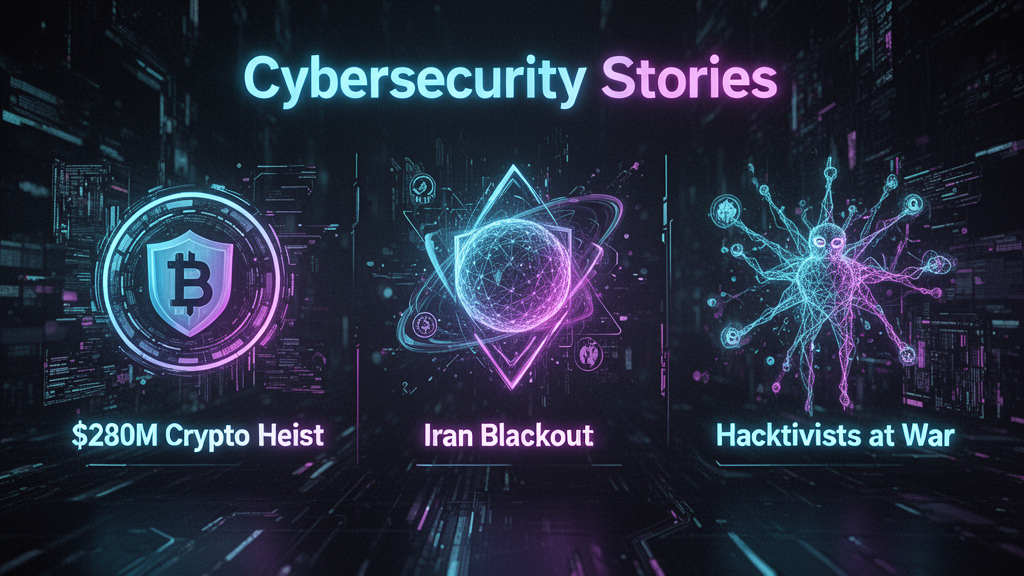
Cybersecurity Stories April 2026: $280M Crypto Heist, Iran Blackout, Hacktivists at War
Table of Contents
Behind April 2026’s cybersecurity statistics are human stories: a $280 million cryptocurrency theft that wiped out users’ savings, 87 million Iranians cut off from the internet for 47 days, 70+ hacktivist groups mobilizing for a real military conflict, and Google’s AI crossing into classified Pentagon operations. Here are the most compelling cybersecurity narratives of the week.
The $280 Million Crypto Heist
A cryptocurrency trading platform disclosed a $280 million theft this week — one of the largest single digital asset heists of 2026. The attack combined employee social engineering with exploit code that drained hot wallet balances before automated circuit breakers could activate. Funds were moved through DEX swaps and privacy mixers within 22 minutes — faster than any human incident response team. For the platform’s users, many holding life savings in crypto accounts, the loss is total and uninsured. The incident underscores that crypto exchange security, while improving, remains inadequate against sophisticated, coordinated attackers.
Iran’s 47-Day Internet Blackout: A Nation Goes Dark
When US-Iran hostilities began in early March 2026, Iranian authorities imposed one of history’s longest national internet shutdowns — 47 days that cut 87 million people from banking, communication, and information. Small businesses collapsed. Families lost contact with relatives abroad. Hospitals struggled with digital record systems. The blackout also backfired strategically: Unit 42 researchers documented that it significantly disrupted Iran’s own state-sponsored cyber operations by cutting threat actor infrastructure access. Internet access partially restored on April 17, but social media remains blocked.
70+ Hacktivist Groups Join a Real War
More than 70 hacktivist groups mobilized in response to the US-Iran conflict — the largest hacktivist activation since early Russia-Ukraine hostilities. Behind the statistics are real actors: veterans, students, ideological programmers, and paid contractors operating under hacktivist banners, some with state logistical support. Their targets are civilian institutions — hospitals, financial clearing houses, election commissions, emergency services. A documented DDoS attack on a hospital during a wartime surge period delayed patient care. The normalization of attacking civilian digital infrastructure in geopolitical conflicts is 2026’s most concerning security trend.
Google’s AI Goes Classified: The War Room Gets a New Analyst
Google signed a classified agreement with the U.S. Department of Defense on April 28 to deploy AI in sensitive military contexts. This is unprecedented: commercial AI products, built for enterprise productivity, now operating in classified environments alongside the most sensitive U.S. government intelligence. The questions this raises — liability for AI-assisted military decisions, the boundary between commercial and weapons AI, and the security implications of classified deployments of open-architecture models — are not hypothetical. They require answers before incidents, not after.
The Human Cost of AI Security Debt
Microsoft’s Entra ID vulnerability disclosure this week — an AI agent administrator role that enables privilege escalation across entire tenants — illustrates that the rush to deploy AI governance tools is creating new attack surfaces faster than security teams can assess them. The organizations at greatest risk are those adopting AI capabilities faster than their security maturity can support. In April 2026, that description fits most of the enterprise market.
 Illustrative photo · Photo by DS stories on Pexels.
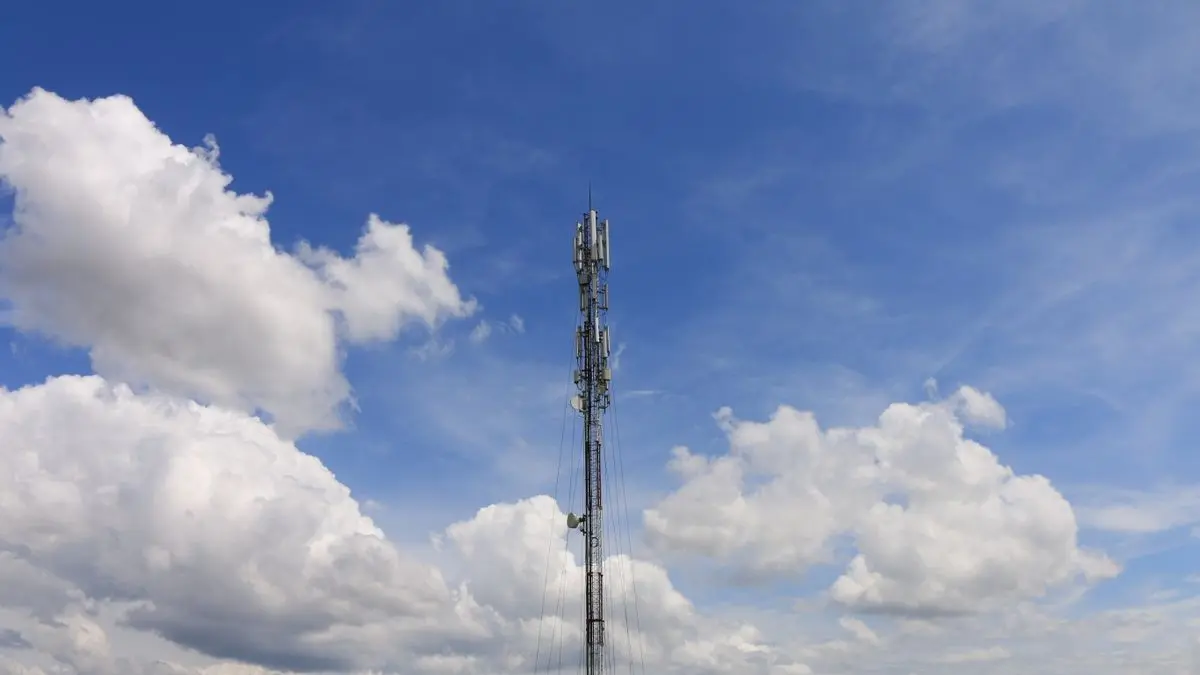 Illustrative photo · Photo by Jolenne Trieu on Pexels.
 Illustrative photo · Photo by panumas nikhomkhai on Pexels.
 Illustrative photo · Photo by Dan Nelson on Pexels.
Top Cybersecurity Stories April 2026
The cybersecurity stories April 2026 cycle delivered some of the most consequential developments in recent memory. From massive cryptocurrency heists to state-sponsored operations and hacktivist campaigns, the month’s events underscored the evolving nature of digital threats.
Our comprehensive coverage of cybersecurity stories April 2026 examines the incidents, trends, and implications that security professionals need to understand. These stories reveal attack patterns, defensive lessons, and geopolitical dynamics shaping the cybersecurity landscape.
The $280 Million Crypto Heist: Cybersecurity Stories April 2026
Anatomy of the Attack
The largest of the cybersecurity stories April 2026 was the $280 million cryptocurrency heist targeting a major decentralized exchange. Attackers exploited a vulnerability in the platform’s cross-chain bridge protocol, draining funds before automated protections could respond.
Investigation revealed the attackers spent weeks reconnaissance, mapping the bridge’s transaction validation logic. The cybersecurity stories April 2026 analysis showed this was not an opportunistic attack but a patient, well-resourced operation exploiting a subtle code flaw.
Funds were quickly laundered through mixers and multiple chain hops, complicating recovery efforts. This cybersecurity stories April 2026 incident renewed debates about decentralized finance security and whether cross-chain bridges represent an unacceptable systemic risk.
Industry Response
The heist prompted immediate responses across the crypto ecosystem. Among cybersecurity stories April 2026, this incident drove the most policy discussion, with regulators calling for mandatory smart contract audits and bridge security standards.
Several platforms paused cross-chain operations pending security reviews. The cybersecurity stories April 2026 ripple effects included insurance providers raising premiums for DeFi protocols and some institutional investors pausing crypto exposure.
Iran Blackout Cyber Attack: Cybersecurity Stories April 2026
Infrastructure Under Siege
Among the most alarming cybersecurity stories April 2026 was a cyber attack causing widespread power outages across Iran. The incident highlighted critical infrastructure vulnerability and raised questions about attribution in an era of plausible deniability.
Initial forensic analysis suggested the attack targeted industrial control systems at multiple power generation facilities. The cybersecurity stories April 2026 reporting indicated sophisticated malware designed to cause physical disruption while masking its origin.
Iranian officials attributed the attack to foreign state actors, though independent verification proved challenging. This cybersecurity stories April 2026 development demonstrates how cyber operations increasingly target civilian infrastructure, blurring lines between warfare and espionage.
Broader Implications
The Iran blackout joins a growing list of cybersecurity stories April 2026 involving infrastructure attacks. From Ukraine’s power grid to Colonial Pipeline, the pattern is clear: critical infrastructure represents an attractive target for both state and non-state actors.
The incident prompted governments worldwide to review their own infrastructure defenses. cybersecurity stories April 2026 analysis suggests that many nations remain inadequately prepared for sophisticated ICS attacks despite years of warnings.
Hacktivist Campaigns: Cybersecurity Stories April 2026
Coordinated Operations
Hacktivist activity surged in April 2026. Cybersecurity stories April 2026 documented multiple coordinated campaigns targeting government websites, financial institutions, and media organizations across several geopolitical flashpoints.
These operations combined DDoS attacks, website defacements, and data dumps. While individually low-sophistication, the cybersecurity stories April 2026 coverage showed collective impact was significant, with several targets experiencing extended downtime.
Attribution proved complicated. Some hacktivist groups appeared genuinely independent, while others showed patterns suggesting state coordination. The cybersecurity stories April 2026 analysis highlights the growing difficulty of distinguishing patriotic hackers from state proxies.
Notable Campaigns
One prominent cybersecurity stories April 2026 hacktivist campaign targeted election infrastructure in multiple countries, exploiting the concentration of global elections this year. While no vote tallying systems were compromised, voter information portals faced sustained attacks.
Another campaign focused on environmental activism, targeting fossil fuel companies with data exfiltration and website defacements. These cybersecurity stories April 2026 incidents demonstrated hacktivism’s expanding ideological range.
Google AI at the Pentagon: Cybersecurity Stories April 2026
Military AI Partnership
One of the most debated cybersecurity stories April 2026 was the revelation of expanded Google AI integration with Pentagon systems. The partnership, focused on threat detection and autonomous defense capabilities, raised significant ethical and security questions.
The cybersecurity stories April 2026 coverage highlighted tensions between commercial AI companies and military applications. Google employees expressed concerns, echoing the 2018 Project Maven protests, though the company leadership defended the engagement as defensive in nature.
Technical details remained classified, but cybersecurity stories April 2026 reporting suggested the AI systems process classified threat intelligence feeds and assist in identifying anomalous network behavior across military networks.
Industry and Ethical Debate
The Google-Pentagon partnership became a lightning rod in cybersecurity stories April 2026 discussions about AI in warfare. Critics argued that commercial AI companies embedding with military operations creates conflicts of interest and risks escalating autonomous warfare.
Supporters countered that AI-enhanced defense is necessary given the speed and sophistication of modern cyber threats. The cybersecurity stories April 2026 debate reflects fundamental questions about the role of AI in national security that remain unresolved.
Lessons from Cybersecurity Stories April 2026
Supply Chain Security
Multiple cybersecurity stories April 2026 incidents involved supply chain compromises. The crypto heist, infrastructure attacks, and several smaller breaches all traced back to trusted vendor relationships exploited by attackers.
These cybersecurity stories April 2026 reinforce that supply chain security requires continuous vendor assessment, not point-in-time evaluations. Organizations must implement ongoing monitoring of third-party access and behavior.
Attribution Challenges
Attribution emerged as a recurring theme in cybersecurity stories April 2026. The Iran blackout, hacktivist campaigns, and even the crypto heist all featured attribution uncertainty that complicated response options.
False flag operations, proxy actors, and genuine ambiguity make definitive attribution increasingly difficult. Cybersecurity stories April 2026 suggest that organizations must plan responses that don’t depend on knowing exactly who attacked them.
AI as Double-Edged Sword
The Google-Pentagon story and several other cybersecurity stories April 2026 incidents highlighted AI’s dual nature in cybersecurity. The same capabilities that enhance defense can power more sophisticated attacks.
AI-generated phishing, automated vulnerability discovery, and intelligent evasion techniques appeared in multiple cybersecurity stories April 2026 incidents. Organizations must invest in AI-enabled defense to match AI-enabled threats.
Looking Ahead After Cybersecurity Stories April 2026
The cybersecurity stories April 2026 collectively paint a picture of escalating threats across multiple dimensions. Financial losses are growing, infrastructure targets are expanding, and the AI arms race is accelerating.
For security professionals, cybersecurity stories April 2026 reinforce the need for layered defenses, rapid response capabilities, and continuous adaptation. The threats documented this month will evolve, but the fundamental principles of good security—vigilance, preparation, and resilience—remain constant.
Frequently Asked Questions About cybersecurity stories April 2026
What is cybersecurity stories April 2026 and why is it important?
Understanding cybersecurity stories April 2026 is critical for professionals and organizations navigating today’s rapidly evolving landscape. This topic directly impacts strategic decisions, operational efficiency, regulatory compliance, and long-term competitiveness in the marketplace.
How can organizations prepare for cybersecurity stories April 2026?
Organizations should conduct thorough assessments of their current capabilities, invest in team training and development, develop implementation roadmaps with clear milestones, and establish monitoring systems to track progress. Staying informed about cybersecurity stories April 2026 developments ensures proactive rather than reactive responses.
What are the main challenges associated with cybersecurity stories April 2026?
The primary challenges include resource constraints, skill gaps, regulatory compliance requirements, technology integration complexities, and the need for continuous adaptation. However, these challenges also present opportunities for innovation, differentiation, and competitive advantage.
How does cybersecurity stories April 2026 compare to previous approaches?
Compared to earlier methods and frameworks, cybersecurity stories April 2026 represents a significant evolution in both scope and impact. The pace of change has accelerated dramatically, requiring more agile, informed, and proactive approaches from all stakeholders involved.
What should readers watch for regarding cybersecurity stories April 2026?
Key indicators to monitor include regulatory developments, market adoption rates, technological breakthroughs, expert analyses, and industry best practices. Subscribing to reputable newsletters and following thought leaders provides valuable ongoing insights.
Expert Insights and Strategic Analysis
Industry experts and analysts have been closely monitoring developments related to cybersecurity stories April 2026, offering valuable perspectives on current trends and future directions that provide additional context and depth.
Professional Perspectives
Leading professionals emphasize that cybersecurity stories April 2026 represents a fundamental shift rather than an incremental change. The implications extend across organizational boundaries, affecting strategy, operations, technology infrastructure, and organizational culture simultaneously.
Common Pitfalls to Avoid
Several common mistakes can undermine effectiveness when addressing cybersecurity stories April 2026. These include underestimating implementation complexity, failing to secure adequate resources, neglecting change management, treating initiatives as one-time projects rather than ongoing programs, and insufficient stakeholder communication.
Building a Sustainable Approach
Sustainability in the context of cybersecurity stories April 2026 requires ongoing commitment, regular reassessment, and adaptive planning. Organizations should establish feedback loops, monitor key performance indicators, and adjust strategies as conditions evolve over time.
The Competitive Advantage of Early Adoption
Organizations that move quickly to understand and address cybersecurity stories April 2026 often gain significant competitive advantages including enhanced reputation, improved operational efficiency, stronger regulatory positioning, and the ability to shape industry standards and best practices.
Recommendations for Different Organization Sizes
The approach to cybersecurity stories April 2026 should vary based on organizational size. Large enterprises can invest in dedicated teams and comprehensive programs. Mid-sized organizations benefit from focused initiatives. Small organizations should prioritize foundational steps and leverage external expertise.
Conclusion and Future Outlook
This comprehensive analysis of cybersecurity stories April 2026 has explored multiple dimensions including current trends, strategic considerations, best practices, risk management, and future outlook. The key takeaway is that cybersecurity stories April 2026 demands proactive engagement from organizations of all sizes. By implementing the strategies and recommendations discussed, readers can position themselves effectively. Continuous learning, strategic planning, and adaptive execution remain the cornerstones of success.
Deep Dive: Understanding cybersecurity stories April 2026 in Practice
Real-World Applications and Case Studies
Examining real-world applications of cybersecurity stories April 2026 reveals practical insights that theoretical frameworks alone cannot provide. Organizations across various sectors have implemented strategies addressing cybersecurity stories April 2026 with varying degrees of success. Their experiences offer valuable lessons for others embarking on similar journeys. Case studies demonstrate that success depends on factors including leadership commitment, resource allocation, stakeholder engagement, and adaptation to local conditions.
Implementation Framework for cybersecurity stories April 2026
A structured implementation framework for cybersecurity stories April 2026 typically includes several phases. The assessment phase evaluates current state and identifies gaps. The planning phase develops detailed roadmaps with timelines and resource requirements. The execution phase implements planned activities while monitoring progress. The optimization phase refines approaches based on outcomes and feedback. Each phase requires specific competencies and deliverables.
Measuring ROI and Impact
Demonstrating return on investment for cybersecurity stories April 2026 initiatives requires clear metrics and consistent measurement. Quantitative measures might include cost savings, revenue improvements, efficiency gains, and risk reduction. Qualitative indicators encompass stakeholder satisfaction, brand reputation, competitive positioning, and strategic alignment. Organizations should establish baseline measurements before implementation to enable meaningful before-and-after comparisons.
Integration with Existing Systems
Integrating cybersecurity stories April 2026 considerations into existing organizational systems and processes requires careful planning. This includes aligning with current technology infrastructure, incorporating into governance frameworks, embedding into operational procedures, and reflecting in performance metrics. Successful integration minimizes disruption while maximizing value, creating synergies rather than conflicts with established practices.
Training and Capability Building
Building internal capabilities for managing cybersecurity stories April 2026 requires comprehensive training programs. These should address both technical skills and broader competencies including strategic thinking, risk assessment, and change management. Effective programs combine formal training, hands-on experience, mentorship, and continuous learning opportunities. Investment in human capital yields the highest returns for sustainable success.
Regulatory and Compliance Considerations
The regulatory landscape surrounding cybersecurity stories April 2026 continues to evolve, with new requirements emerging regularly. Organizations must maintain awareness of applicable regulations, implement compliance measures, document their efforts, and prepare for potential audits or assessments. Engaging with regulatory bodies and industry associations provides early visibility into upcoming changes and opportunities to shape policy development.
Final Thoughts on cybersecurity stories April 2026
As this analysis demonstrates, cybersecurity stories April 2026 is a multifaceted topic that demands comprehensive understanding and strategic response. The organizations and individuals who invest in building knowledge, developing capabilities, and maintaining vigilance will be best positioned to thrive amid ongoing changes. The journey requires commitment, resources, and adaptability, but the potential rewards justify the investment. We encourage readers to continue exploring this topic, engaging with expert communities, and implementing the strategies discussed to achieve their objectives.