
RAG Pipeline Tutorial: 7 Essential Steps for an Amazing 2026
Retrieval augmented generation has become the backbone of trustworthy AI applications in 2026. Instead of relying on a language model’s frozen training data, a well-built system grounds every answer in your own documents, knowledge bases, and live APIs. This RAG pipeline tutorial walks you through the full architecture, from raw text to evaluated output, so you can ship a system that is both accurate and defensible.
By the end you will understand chunking strategies, embedding models, vector search, prompt assembly, and continuous evaluation. Each step includes concrete configuration advice you can apply this week as you build your own RAG pipeline. If you are new to the underlying concepts, our primer on agentic AI core concepts explains how retrieval fits into the broader landscape and why grounding matters.
 Conceptual illustration · Photo by Google DeepMind on Pexels.
Table of Contents
- Why a RAG Pipeline Beats Fine-Tuning in 2026
- Step 1: Gather and Clean Your Source Documents
- Step 2: Choose a Chunking Strategy That Preserves Context
- Step 3: Generate Embeddings With the Right Model
- Step 4: Pick and Configure Your Vector Database
- Step 5: Implement Semantic Search and Retrieval
- Step 6: Assemble Prompts and Generate Answers
- Step 7: Evaluate, Monitor, and Iterate
- Common RAG Pipeline Pitfalls and How to Avoid Them
- Tools, Costs, and Next Steps
Why a RAG Pipeline Beats Fine-Tuning in 2026
A RAG pipeline separates knowledge from reasoning. The language model stays general-purpose while an external retrieval layer supplies fresh, domain-specific context at query time. This split matters more than ever in 2026 because model parameters have grown faster than any single team’s ability to safely fine-tune them. Updating a vector index is minutes of work; retraining a frontier model is weeks of GPU time.
The economic case is equally compelling. Retrieval augmented generation lets you cite sources, revoke access instantly, and audit which document informed which answer. A well-instrumented RAG pipeline makes every response traceable. Regulators in the EU and several US states now expect exactly that traceability. Our coverage of the EU AI Act compliance guide details obligations that retrieval architectures satisfy more naturally than opaque fine-tuned models.
When Retrieval Augmented Generation Outshines Alternatives
Choose this architecture when your knowledge changes frequently, when you need source citations, when access control varies by user, or when the corpus is too large to fit in a single prompt. Choose fine-tuning only for style, tone, or specialized formats. Many teams combine both: a fine-tuned model wrapped by a retrieval layer that supplies fresh facts.
Security is another driver. Because retrieved context is injected per request, you can redact or restrict sensitive passages before they ever reach the model. This aligns with the cloud security best practices we documented earlier, where least-privilege retrieval is a core control. Teams that handle regulated data increasingly treat the retrieval layer as a security boundary.
Cost predictability matters too. Fine-tuning a frontier model can cost tens of thousands of dollars per run, with no guarantee the result is better. A retrieval system’s cost is dominated by storage and query volume, both of which scale linearly and can be modeled precisely. For startups and enterprises alike, that predictability is a strategic advantage worth building around.
 Illustrative photo · Photo by Myburgh Roux on Pexels.
Step 1: Gather and Clean Your Source Documents
Every retrieval system is only as good as the documents it searches. Start by inventorying your sources: internal wikis, PDFs, support tickets, product manuals, code repositories, and structured databases. List each source’s format, update frequency, and sensitivity level. This inventory becomes your ingestion backlog and your compliance map.
Cleaning is unglamorous but decisive. Strip boilerplate headers and footers, resolve encoding mismatches, and remove duplicated content. PDFs often hide text in images, so run OCR on scanned pages with a tool like Tesseract or a managed service. Normalize whitespace and Unicode so embeddings see consistent input. A few hours of cleaning here prevents weeks of hallucinated answers later.
Structuring Unstructured Text for Ingestion
Convert everything to a common intermediate format before chunking. A simple JSON document with fields for source, title, section, page, and raw text works well. Preserving metadata now pays off during retrieval, because you can filter by source, date, or access group. Avoid flattening structure too early; keep headings and table relationships intact where possible.
For tabular data, export rows as natural-language sentences or keep them in a hybrid store. Pure vector search struggles with numbers, so many 2026 systems pair a vector index with a SQL or graph store. The official OpenAI text generation guide describes this hybrid pattern in the context of function calling, and it is worth reading before you design your schema.
Deduplication deserves special attention. Near-duplicate documents produce near-duplicate chunks, which skew retrieval scores and waste context window budget. Use MinHash or embedding-similarity clustering to surface duplicates before indexing. Flag them for human review rather than silently discarding, because sometimes the newer copy is the authoritative one.
Step 2: Choose a Chunking Strategy That Preserves Context
Chunking splits long documents into retrievable units. Get this wrong and your RAG pipeline retrieves fragments that lack the context needed to answer. The goal is to make each chunk self-contained enough to be useful yet small enough to match a specific query intent. There is no universal default; the right strategy depends on your corpus and query patterns.
Three strategies dominate in 2026. Fixed-size chunking with overlap is the simplest: cut every 512 tokens with a 50-token overlap. Sentence-aware chunking respects boundaries using libraries such as spaCy or LangChain’s RecursiveCharacterTextSplitter. Semantic chunking, newer and increasingly popular, groups sentences by embedding similarity so each chunk covers one coherent idea.
Tuning Chunk Size and Overlap for Semantic Search Embedding
There is no universal best size. Dense factoid corpora favor 256-token chunks; narrative documents read better at 768. Overlap of 10 to 20 percent prevents context loss at boundaries. Measure retrieval recall on a held-out question set as you sweep these values. A chunk size that maximizes recall while keeping token cost acceptable is your production default.
Preserve parent-child relationships. Store both the chunk and a pointer to its parent section so a re-ranker or generative step can expand context when needed. This two-level approach is now standard in mature systems because it balances precision with completeness. During semantic search embedding generation, keep the parent text available so a downstream model can read surrounding context on demand.
Watch for a subtle failure mode: chunks that are semantically coherent but lack the entities needed to match a query. A chunk about “the new policy” without naming the department will miss a query about “HR policy updates.” Consider prepending document titles or section headings to each chunk so key entities travel with the text. This small trick measurably improves recall.
Step 3: Generate Embeddings With the Right Model
Embeddings are numeric vectors that capture semantic meaning. Your RAG pipeline compares query embeddings against document chunk embeddings to find the closest matches. The model you choose defines the quality ceiling of retrieval, so treat it as a first-class decision rather than an afterthought.
In 2026 the choice is between proprietary APIs and open-weight models. Proprietary options like OpenAI text-embedding-3 offer convenience and strong benchmarks. Open-weight models such as BGE, E5, and Nomic Embed give you data sovereignty, offline deployment, and no per-token cost. For sensitive corpora, local models are often the only compliant choice.
Dimensionality, Batching, and Cost Trade-Offs
Higher dimensions capture more nuance but increase storage and search latency. Models from 768 to 1536 dimensions hit a practical sweet spot. Batch your embedding requests to amortize network overhead, and cache embeddings keyed by a hash of the input text so re-indexing unchanged content costs nothing. These optimizations compound at scale.
Always re-embed when you switch models. Mixing embedding spaces corrupts similarity scores and is notoriously hard to diagnose. Version your embedding model alongside your index so you can rebuild deterministically. The Massive Text Embedding Benchmark on Hugging Face tracks model quality across tasks and languages, and is the reference leaderboard most teams consult before committing.
Consider domain adaptation if your corpus is specialized. General embedding models underperform on medical, legal, or highly technical text because their training data rarely covers that vocabulary. Fine-tuning an open-weight embedding model on a small set of in-domain query-document pairs can yield surprising gains. Even a few thousand labeled pairs, contrastively trained, often beat a larger general model on niche corpora.
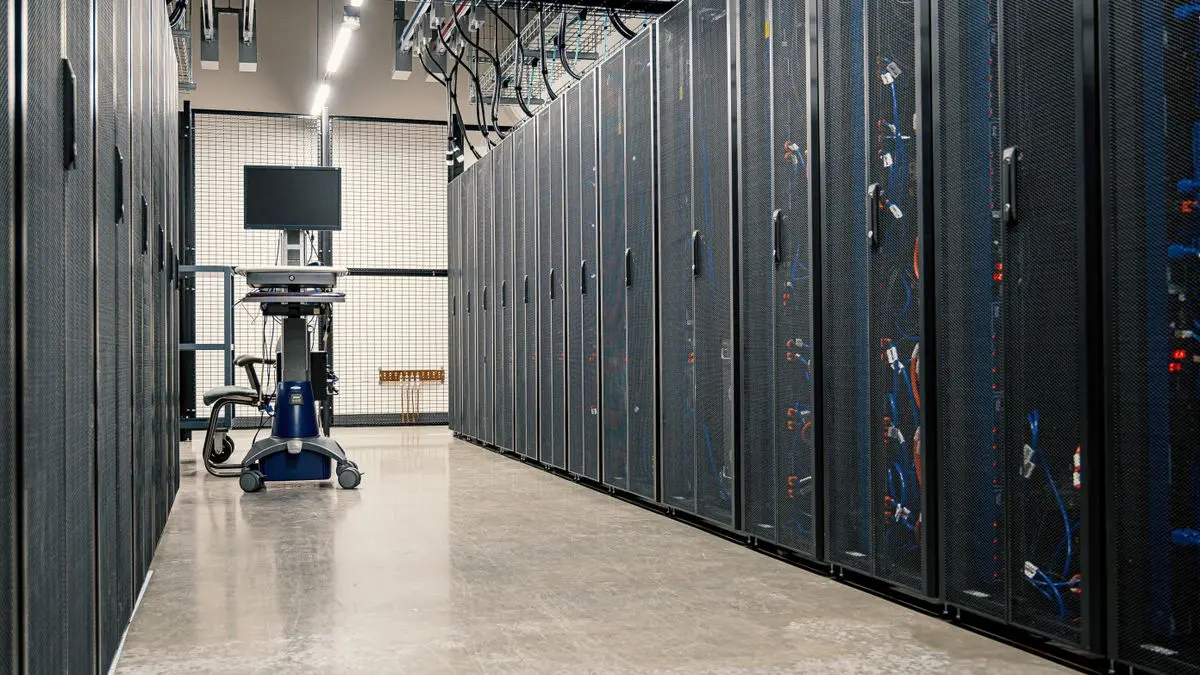 Illustrative photo · Photo by Brett Sayles on Pexels.
Step 4: Pick and Configure Your Vector Database
The vector database is the retrieval engine of your RAG pipeline. It stores embeddings and answers nearest-neighbor queries, usually through approximate nearest neighbor algorithms that trade a sliver of accuracy for large speed gains. Your choice here affects scalability, latency, and operational burden for years.
Managed services such as Pinecone, Weaviate Cloud, and pgvector on managed Postgres remove infrastructure work. Self-hosted options including Qdrant, Milvus, and Chroma give full control and lower variable costs at scale. If you already run PostgreSQL, pgvector is the lowest-friction starting point because it keeps vectors next to your relational data.
Vector Database Setup: Metadata Filters and Hybrid Search
Pure vector similarity is rarely enough. Production systems combine dense vector search with sparse keyword search and metadata filters. Filter by date to exclude stale policies, by source to restrict access, or by language to match the user. Hybrid search, which fuses BM25 keyword scores with vector scores, consistently outperforms either method alone on recall.
Configure HNSW parameters thoughtfully. A higher ef_construction improves index quality at build time; a higher ef_search improves recall at query time. Benchmark both against your real query distribution before locking values. A solid vector database setup documents each parameter choice so future operators understand the trade-offs that were made.
Plan for sharding early. A single-node index is fine for prototyping, but production corpora often exceed memory on one machine. Decide your sharding key, whether by source, tenant, or date range, before you have tens of millions of vectors. Migrating a live index to a sharded topology is painful, while designing for it from day one is cheap.
Step 5: Implement Semantic Search and Retrieval
With documents embedded and indexed, the retrieval step turns a user query into relevant context. This is where your RAG pipeline delivers its core value, and where small implementation details make a large quality difference. Treat retrieval as a tunable subsystem, not a black box you never revisit.
Start simple: embed the query, run a top-k vector search, and return the closest chunks. Then layer improvements. Query expansion rewrites the question into multiple paraphrases to broaden recall. Hybrid search fuses keyword and vector scores. Cross-encoder re-ranking takes the top 50 candidates and re-scores them with a more expensive but more accurate model, returning a refined top five to the generator.
Re-Ranking and Context Window Budgeting
Re-ranking is the single highest-leverage upgrade in most retrieval systems. A lightweight cross-encoder such as bge-reranker can lift answer accuracy by double digits with modest latency cost. Always re-rank when your first-pass retrieval returns more candidates than the context window can hold. The quality jump is usually the largest single improvement teams see.
Budget your context window deliberately. Subtract space for the system prompt, the user question, and a safety margin for the response. Fill the remainder with retrieved chunks ordered by re-ranker confidence. Never blindly pack the window; a single authoritative chunk often outperforms ten marginal ones. For teams building broader automation, our guide on setting up an AI agent for business shows how retrieval plugs into multi-step agent workflows.
Consider multi-query retrieval for complex questions. A user asking “how does our refund policy compare to last year’s” needs two searches: one for the current policy and one for the prior version. Decomposing multi-part questions into sub-queries, retrieving for each, and merging results is a reliable way to handle nuanced asks without overloading a single search.
Step 6: Assemble Prompts and Generate Answers
The prompt is where retrieval meets reasoning. Your RAG pipeline must assemble a prompt that gives the model the retrieved context, the user question, and clear instructions on how to use the context. Prompt engineering for retrieval is stricter than freeform chat because the model must stay anchored to sources.
Structure the prompt in three zones. First, a system instruction that defines the assistant’s role and forbids answering beyond the provided context. Second, the retrieved context, each chunk labeled with its source citation. Third, the user question and a directive to cite sources in the answer. This scaffold dramatically reduces hallucination.
Grounding, Citations, and Guardrails
Ask the model to return inline citations such as [1], [2] that map back to chunk metadata. Verify each citation points to a chunk that actually supports the claim; automated citation checks catch model errors that manual review misses. If no retrieved context is relevant, instruct the model to say so rather than guess. A confident refusal is more valuable than a plausible hallucination.
Add output guardrails. Run a second model or a classifier to detect when an answer drifts from the provided context. Log every prompt, retrieved chunk, and response so you can audit and improve. The NIST AI Risk Management Framework offers authoritative guidance on monitoring and trustworthy AI that pairs well with these guardrails. They are not optional in regulated industries; they are the difference between a demo and a deployable system. Deepen your foundations with our curated list of AI books and courses.
Token efficiency in prompts matters more than people expect. Trim retrieved chunks to the sentences most relevant to the query before insertion; full chunks often contain boilerplate that wastes context and dilutes focus. A simple extractive summarization pass over each retrieved chunk can shrink prompt size by 40 percent without losing the facts that matter, freeing budget for more sources.
 Illustrative photo · Photo by Nemuel Sereti on Pexels.
Step 7: Evaluate, Monitor, and Iterate
A RAG pipeline without evaluation is guesswork. You need quantitative signals that tell you whether a change to chunking, embeddings, or retrieval actually improved answers. In 2026 the state of the practice is automated evaluation pipelines that score retrieval and generation separately and together, then track trends over time.
Build a golden dataset of 100 to 300 question-answer pairs drawn from real user queries. Measure retrieval recall, the fraction of questions where the correct source is in the top-k results. Measure answer faithfulness, the degree to which the generated answer is supported by retrieved context. Measure answer relevance, how directly the response addresses the question. Tools such as RAGAS and TruLens automate these metrics.
Continuous Monitoring in Production
Offline evaluation is necessary but not sufficient. In production, log latency, retrieval scores, citation coverage, and user feedback signals such as thumbs-up or re-ask rates. Track drift in query distribution and embedding space; a model that worked at launch may degrade as your corpus evolves. Set alerts for sudden drops in retrieval confidence.
Schedule periodic re-indexing and re-evaluation. When you upgrade an embedding model, rebuild the index and re-run the golden dataset to confirm improvement. Treat the RAG pipeline as a living system with a release process, not a static script. Version every component so any regression is traceable to a specific change, and record the evaluation scores alongside each version.
Human review remains essential even with strong automated metrics. Sample a percentage of production answers weekly and have a domain expert grade them on accuracy, tone, and citation quality. The expert will catch subtle issues that automated faithfulness checks miss, such as an answer that is technically supported by a source but misleading in context. Feed those findings back into your golden dataset.
Common RAG Pipeline Pitfalls and How to Avoid Them
Most RAG pipeline failures trace back to a handful of mistakes. Recognizing them early saves weeks of debugging. The first and most common is poor chunking: chunks too large dilute relevance, chunks too small lose context. Sweep chunk size empirically rather than copying defaults from a tutorial, and let recall on your golden dataset decide.
The second pitfall is skipping re-ranking. Teams retrieve top-k and pass everything to the model, then wonder why answers feel scattered. A cross-encoder re-ranker almost always pays for itself in answer quality. The third is ignoring metadata filters, which lets stale or unauthorized content leak into responses and creates compliance risk that auditors will eventually find.
Pitfalls in Prompting and Evaluation
The fourth pitfall is weak prompting. Without explicit citation instructions and a refusal directive, models fabricate confidently. The fifth is no evaluation loop, leaving teams to argue about quality from anecdotes. A golden dataset plus automated metrics turns those arguments into data. Finally, avoid mixing embedding versions; it silently corrupts similarity and is notoriously hard to diagnose.
One more: do not neglect the user query. Queries are often short and ambiguous. Query rewriting, expansion, and conversational context compression all improve retrieval before the search even runs. The best systems invest as much in query understanding as in document indexing, because a great index cannot rescue a bad query.
A subtler trap is over-tuning to your golden dataset. If you iteratively adjust chunk size, embedding model, and re-ranker to maximize golden scores, you risk overfitting to those specific questions. Hold out a portion of your dataset and periodically refresh it with new real-world queries so your evaluation reflects actual usage, not a static snapshot.
Tools, Costs, and Next Steps
Your 2026 RAG pipeline stack will likely combine an embedding model, a vector database, a re-ranker, and a generator. Open-source stacks using BGE embeddings, Qdrant, bge-reranker, and a local Llama or Mistral model run entirely on your own hardware with zero per-query API cost. Managed stacks trade sovereignty for speed of deployment.
Cost scales with corpus size, query volume, and model choice. Embedding a million chunks once is cheap; reranking thousands of queries per minute is not. Model your expected load, then choose where to spend. Caching embeddings, batching requests, and using smaller models for first-pass retrieval all reduce spend without hurting quality.
Where to Go From Here
Start small and iterate. Build a pipeline on a few hundred documents, evaluate it rigorously, then scale. Add hybrid search, then re-ranking, then automated evaluation, measuring impact at each step. The discipline of measurement is what separates a production system from a weekend prototype that impresses in a demo but fails under real load.
Retrieval augmented generation is now a core competency for any team shipping AI features. Mastering this RAG pipeline tutorial gives you the foundation to build systems that are accurate, auditable, and trustworthy. Pair it with strong governance and security practices, and you have an architecture ready for the demands of 2026 and beyond. The technology will keep evolving, but the principles of clean data, deliberate retrieval, and rigorous evaluation will remain durable.